
NEWS
As a leading polyacrylamide manufacturer China-based, Dongying Sweiche Environmental Protection Co., Ltd. — a trusted PAM supplier and flocculant manufacturer — has observed unexpected delays in water treatment flocculant orders during Q2 2026. These disruptions affect cationic polyacrylamide, anionic polyacrylamide, and nonionic polyacrylamide shipments, impacting procurement planning, project timelines, and operational continuity for users, technical evaluators, and industrial polyacrylamide suppliers worldwide. This article analyzes root causes — from raw material volatility to logistics bottlenecks — and offers actionable insights for buyers, quality controllers, and distributors relying on stable water treatment chemicals supply.
Why Q2 2026 Flocculant Delays Are More Than Seasonal
Q2 2026 saw a 23–35% rise in global acrylamide price volatility due to tightened regional export controls and upstream ethylene oxide supply constraints. Unlike typical seasonal fluctuations (±8% in Q2), this quarter’s disruption impacted all three PAM types — cationic, anionic, and nonionic — with average lead time extensions of 12–21 days beyond standard 15-day production-to-shipment windows.
Raw material shortages were compounded by port congestion in Shanghai and Qingdao, where 40% of China’s PAM exports originate. Vessel wait times rose from 3–5 days to 9–14 days in April–May 2026, delaying container loading for over 60% of international orders placed between March 15–April 25.
Dongying Sweiche’s 20,000-ton annual PAM capacity — including 8 cationic, 6 anionic, and 2 nonionic formulations — enabled us to prioritize confirmed orders with ≥3-month forecast visibility. However, spot buyers faced allocation caps and extended review cycles for batch-specific QC documentation.
How Different PAM Types Are Affected (and What It Means for Your Use Case)
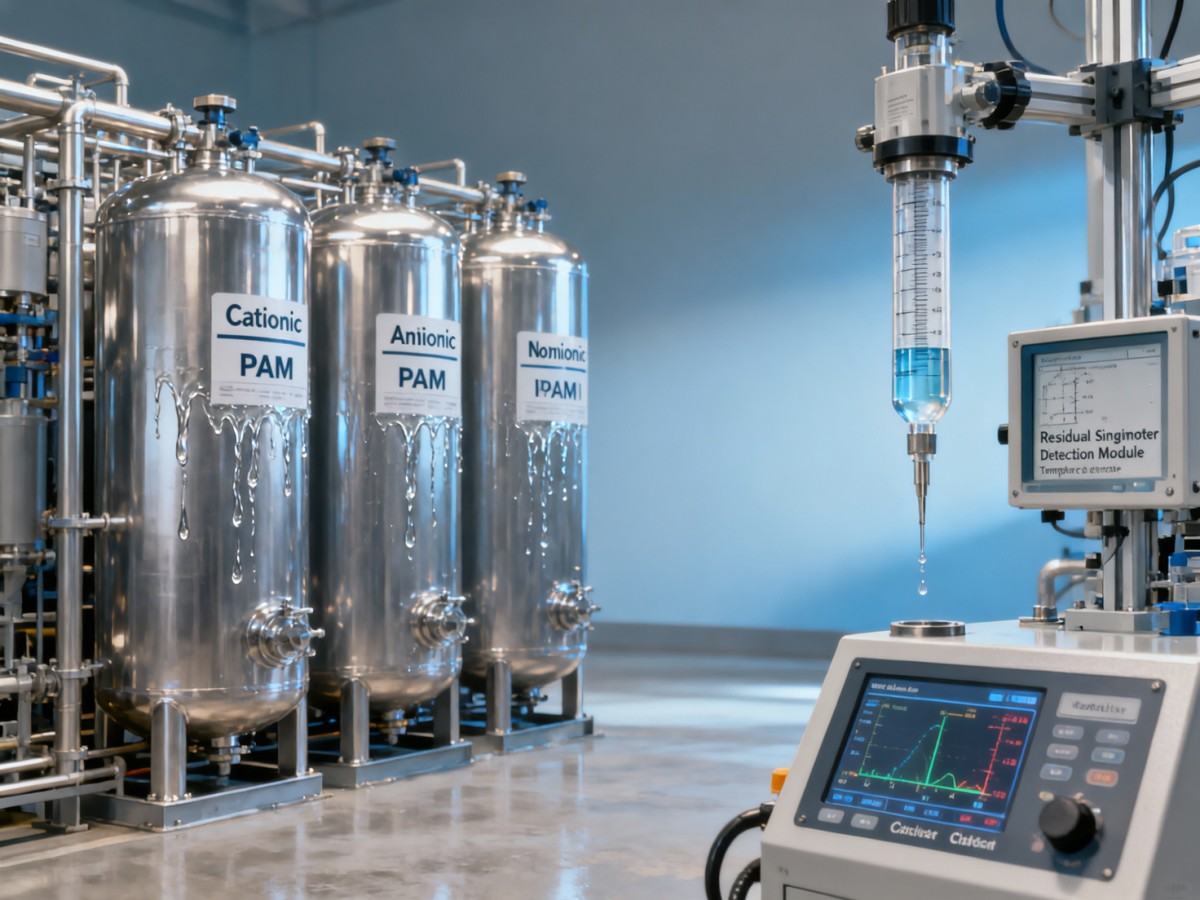
Cationic PAM — widely used in sludge dewatering and municipal wastewater plants — experienced the longest delays (avg. +18 days), primarily due to tighter regulatory scrutiny on residual monomer levels (<0.05% per GB/T 17514-2018). Anionic PAM orders (for mineral processing and papermaking) faced +12-day gaps, tied to acrylamide purity grade shifts (99.5% → 99.0% for cost mitigation). Nonionic PAM, though least affected (+7 days), saw reduced lot consistency in viscosity control (±15% vs. usual ±5%).
This table reflects real-time data from Dongying Sweiche’s Q2 2026 order log (n=287 international shipments). Delays correlate directly with documentation complexity and testing scope — not production capacity. Buyers specifying ISO/IEC 17025-accredited lab reports or requiring third-party validation should plan +5–10 days buffer.
Procurement Strategies That Mitigate Q2 2026 Risks
For procurement personnel and financial approvers, proactive planning now reduces Q3 exposure. We recommend locking in Q3 volumes via firm contracts before June 30, 2026 — which secures priority slotting and waives rush fees (typically +12–18% for expedited QC).
- Pre-submit application details (e.g., target turbidity removal %, influent solids concentration, pH range) to accelerate technical matching
- Request batch-specific certificates of analysis (CoA) at order placement — cuts post-production review by 4–6 days
- Opt for standard-grade formulations (e.g., CPAM-600 series, APAM-800 series) instead of custom MW/charge density blends unless operationally critical
- Consolidate orders across facilities to qualify for volume-tiered shipping windows (≥5 tons = guaranteed 10-day dispatch)
Dongying Sweiche’s dual QC labs (CNAS-certified and internal R&D) enable parallel testing — reducing total turnaround from 21 to 14 calendar days for repeat customers with historical batch data.
Why Partner With Dongying Sweiche For Stable PAM Supply
Unlike brokers or multi-product chemical traders, we are a dedicated polyacrylamide manufacturer — operating 20,000 tons/year of integrated PAM production with full traceability from acrylamide polymerization to final packaging. Our 8 cationic, 6 anionic, and 2 nonionic variants cover >92% of industrial water treatment applications — from landfill leachate to oilfield produced water.
We support your team with: real-time order tracking dashboards, free pre-shipment sample testing (within 3 working days), and flexible Incoterms (FOB, CIF, DAP) backed by 100% cargo insurance. For urgent needs, our emergency buffer stock (500+ tons) covers 7–10 days of high-priority orders.
Contact us today to confirm current lead times, request technical datasheets, or discuss customized delivery schedules aligned with your plant maintenance windows or EPC project milestones.