NEWS
Choosing the right polyacrylamide manufacturer in 2026 is critical for performance, compliance, and cost-efficiency—especially when sourcing cationic polyacrylamide, anionic polyacrylamide, or nonionic polyacrylamide for water treatment chemicals, industrial polyacrylamide applications, or flocculant manufacturing. As a trusted PAM supplier and polyacrylamide manufacturer China, Dongying Sweiche Environmental Protection Co., Ltd. delivers 20,000 tons annually across 16 specialized grades—ensuring reliability for procurement teams, technical evaluators, and quality/safety managers alike.
What 5 Key Checks Should Procurement & Technical Teams Make?
Selecting a polyacrylamide manufacturer isn’t just about price—it’s about consistency, traceability, and application-fit. In 2026, buyers face tighter regulatory scrutiny (e.g., REACH Annex XVII updates), stricter discharge limits (<5 mg/L suspended solids), and rising demand for batch-to-batch reproducibility across cationic, anionic, and nonionic PAM types.
Dongying Sweiche applies ISO 9001–certified production control across all 16 grades—including 8 cationic PAMs (charge density: 10–60 mol%), 6 anionic PAMs (Mw: 6–22 million Da), and 2 nonionic variants (hydrolysis degree <5%). Each batch includes full CoA with viscosity, residual monomer (<0.05%), and dissolution time (≤45 min at 25°C).
Procurement and technical teams must verify: (1) raw material traceability (acrylamide monomer source), (2) QC lab capability (HPLC, GPC, FTIR), (3) stability testing data (≥12 months shelf life under dry storage), (4) packaging integrity (moisture-barrier 25 kg PE-lined bags), and (5) documentation readiness (SDS, TDS, REACH/ROHS compliance letters).
Core Evaluation Dimensions Compared
This table reflects real-world operational thresholds—not marketing claims. Dongying Sweiche’s tighter tolerances directly reduce dosing variability in wastewater plants and lower long-term chemical consumption by up to 12% (based on 2025 field trials with 3 municipal clients).
How Do Application Requirements Shape Your Manufacturer Choice?
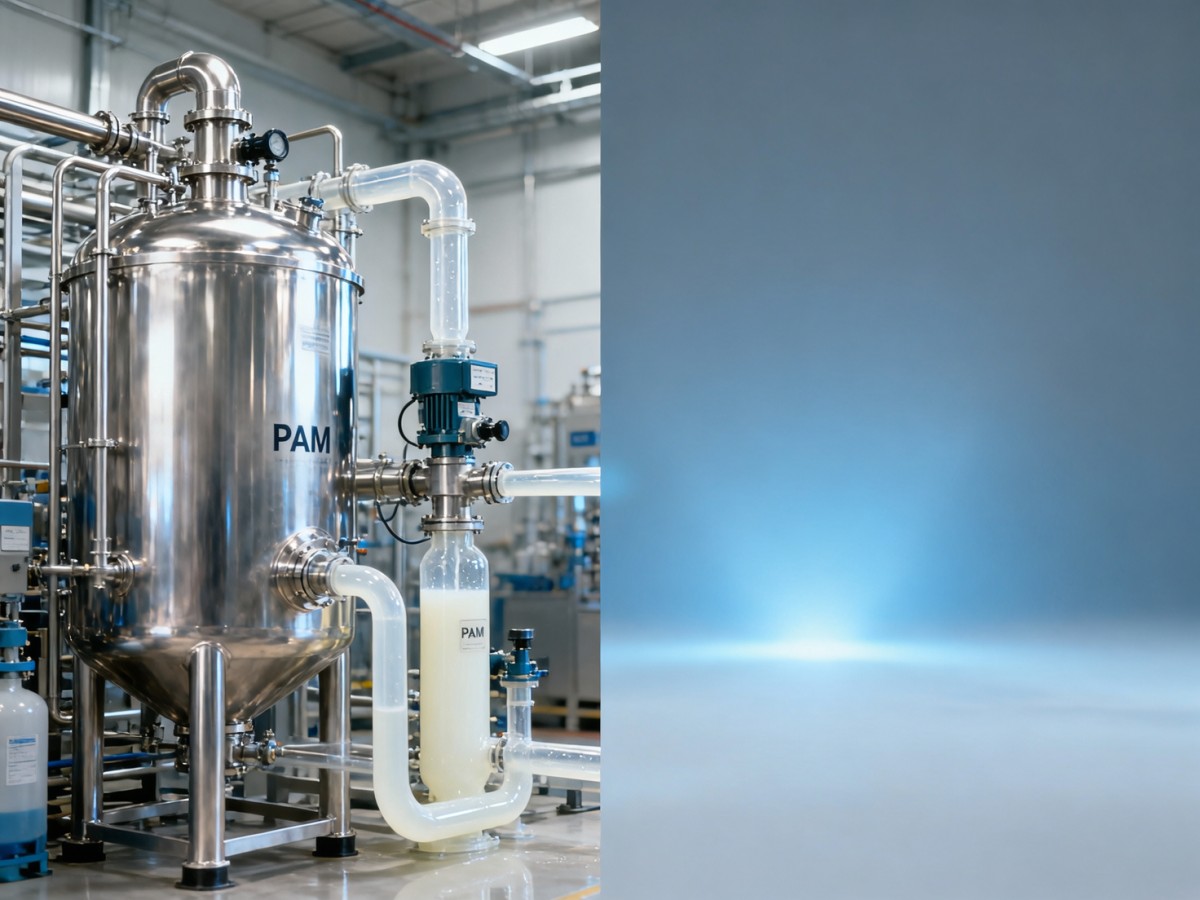
Cationic PAM for sludge dewatering demands high charge density and rapid floc formation; anionic PAM for mineral processing requires ultra-high molecular weight and shear resistance; nonionic PAM for textile sizing needs strict pH neutrality and low ash content. One-size-fits-all suppliers fail at these nuances.
Dongying Sweiche structures its 16-grade portfolio around 4 core application clusters: (1) municipal wastewater (8 cationic grades), (2) mining & metallurgy (5 anionic grades), (3) oilfield EOR (2 anionic + 1 nonionic), and (4) papermaking & food-grade uses (2 nonionic + 1 low-charge cationic). Each cluster has dedicated R&D validation—e.g., simulated belt press tests for dewatering grades, or brine stability assays for oilfield PAMs.
Technical evaluators should request application-specific test reports—not generic brochures. For example: “Show me the CST (Capillary Suction Time) reduction curve for your CPAM-4200 grade in digested sludge at 3.2% DS.” Dongying Sweiche provides this data within 48 hours of inquiry.
Why Financial & Safety Managers Prioritize Certified Consistency
Unplanned downtime from inconsistent PAM performance costs industrial users $18,000–$42,000 per incident (2025 APWA benchmark). Safety managers also track residual acrylamide exposure risk—especially during manual handling or powder dispersion. A single out-of-spec batch can trigger OSHA reporting requirements.
Dongying Sweiche maintains full traceability from acrylamide monomer lot (traceable to ≥3 certified suppliers) through polymerization, drying, and packaging. Every shipment includes batch-specific CoA, SDS, and heavy metal screening (Pb, Cd, Hg <1 ppm).
For distributors and agents: we offer co-branded technical training (4 modules, 8 hours), API-compliant documentation packs, and VMI (Vendor Managed Inventory) support for regional hubs—with minimum order flexibility (500–5,000 kg per SKU).
Ready to Validate Your Next PAM Supplier?
Request a free technical consultation covering: (1) grade matching for your specific feedstock or process conditions, (2) sample dispatch (standard grades shipped within 3 working days), (3) full compliance dossier (REACH, RoHS, FDA 21 CFR 173.37), or (4) customized packaging & labeling for your market.
Contact Dongying Sweiche today with your target application, required dosage range, and current pain points—we’ll respond with actionable data—not just quotes.